
King and Queen County Criminal Records
King and Queen County criminal records are maintained by the Circuit Court Clerk and the Sheriff's Office at the county seat, King and Queen Court House. This small, rural county is part of the 9th Judicial Circuit in the Middle Peninsula region of Virginia. Felony cases are filed at the Circuit Court, and misdemeanor matters go to the General District Court. You can search criminal case records online through the Virginia OCIS system or contact the county clerk's office directly to request copies.
King and Queen County Overview
King and Queen County Circuit Court
Virginia's circuit courts, described at vacourts.gov, include the King and Queen County Circuit Court which maintains felony criminal case records.
The King and Queen County Circuit Court is part of the 9th Judicial Circuit and handles all felony cases filed in the county.
The Circuit Court Clerk in King and Queen Court House is the official keeper of all felony criminal case files for the county. This includes indictments, pleas, court orders, sentencing records, and final case dispositions. King and Queen County is one of the least populous counties in Virginia, but the same rules apply for accessing records. Anyone can request copies of public criminal case files during normal business hours.
To request records, go to the courthouse in person or mail a written request. Include the full name of the person you are looking up, the approximate year or date range of the case, and any case number you have. Copy fees are $0.50 per page under Virginia Code § 17.1-275. The clerk can tell you what is available and whether any records may be restricted by court order.
| Office | King and Queen County Circuit Court Clerk |
|---|---|
| Address | 242 Courthouse Lane, King and Queen Court House, VA 23085 |
| Circuit | 9th Judicial Circuit |
| Hours | Monday through Friday, 8:30 AM to 4:30 PM |
| Website | vacourts.gov |
General District Court and OCIS Search
The King and Queen County General District Court handles misdemeanor criminal matters, traffic cases, and preliminary felony hearings. The court is part of the 9th General District. Contact details and court schedules are on the King and Queen County General District Court page at the Virginia Courts website.
Criminal case records from King and Queen County are searchable online through the Virginia OCIS system at eapps.courts.state.va.us. Choose King and Queen County from the locality list, then pick the court type. Search by the person's name or case number. The system shows charges, hearing dates, and final dispositions for public cases. Sealed and expunged records will not appear. Older paper-only records may also not be in the online system yet.
Because King and Queen County is rural and small, calling the clerk's office first is often the quickest way to confirm whether a record exists and how to get a copy. The clerk can verify case status and explain the correct way to request the documents you need.
Note: Online searches are a good starting point, but certified copies and full case files require contacting the clerk in person or by mail.
Sheriff's Office and Arrest Records
The King and Queen County Sheriff's Office is the primary law enforcement agency in the county. The Sheriff maintains arrest logs, booking records, and incident reports. To request these records, you file a written FOIA request with the Sheriff's Office. Under the Virginia Freedom of Information Act, agencies must respond within five business days as required by Virginia Code § 2.2-3704.
The Virginia FOIA Council provides public guidance on what law enforcement records are subject to disclosure. Basic arrest information is generally public. This covers the name of the person arrested, the charge, the date, and the location. Records tied to open investigations may be withheld. Once a case is closed and resolved, more information typically becomes available upon request.
Virginia criminal records law, including the CCRE statutes at law.lis.virginia.gov, governs how King and Queen County records are kept and shared.
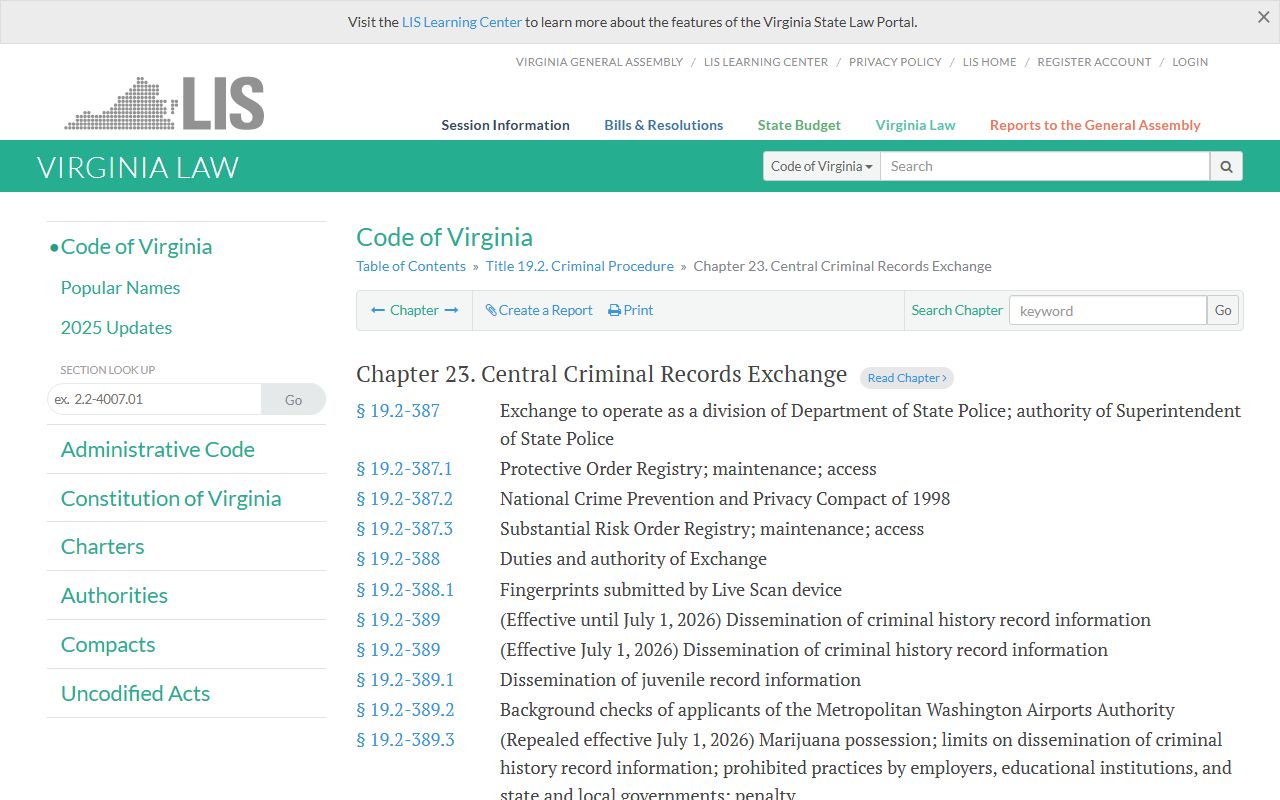
Under § 19.2-387, all arrests in King and Queen County are reported to the Central Criminal Records Exchange.
This means a full Virginia criminal history for any person requires a search through the CCRE at the Virginia State Police. The SP-167 form is used for name searches at $15 per search, or $20 for a combined criminal history and sex offender registry search. Forms are available at vsp.virginia.gov/forms. The CCRE maintained by the Virginia State Police is the most complete source for statewide criminal history information.
For inmates held in state correctional facilities, the VADOC Inmate Locator at vadoc.virginia.gov can help you find someone by name or offender ID. For local jail holds in King and Queen County, contact the Sheriff directly.
Expungement in King and Queen County
King and Queen County residents who had criminal charges dismissed or were found not guilty may be eligible to expunge their records under Virginia Code § 19.2-392.2. Expungement removes the arrest and court records from public databases and requires the Virginia State Police to update the CCRE as well.
The petition is filed in the King and Queen County Circuit Court at the county seat. Required information includes your date of birth, the arrest date, the name of the arresting agency, the specific charge, and the final disposition date. The Commonwealth's Attorney receives a copy and may file an objection within 21 days. The court then holds a hearing and makes a ruling.
People with no prior record who were charged with a misdemeanor that was dismissed are generally entitled to expungement, absent a showing of good cause by the Commonwealth. Felony expungements require showing a manifest injustice from the continued existence of the record. That is a higher bar, but courts do grant felony expungements in appropriate cases. Once a court grants expungement, local records and the CCRE are both updated to remove the information.
Anyone considering expungement should look at lawhelpva.org for free guidance. Legal aid is also available for income-eligible residents who need help with the petition process.
Legal Resources for King and Queen County
Residents of King and Queen County can access legal help through organizations serving the Middle Peninsula region of Virginia. The Virginia Legal Aid Society assists eligible residents with expungements and other civil legal matters. LawHelpVirginia at lawhelpva.org provides free self-help guides on criminal records, expungements, and your rights under Virginia law. These resources are useful whether you plan to hire an attorney or handle things yourself.
The Virginia State Bar's lawyer referral service at vsb.org connects people with licensed attorneys who practice criminal law and expungement in the area. For a small, rural county like King and Queen, you may need to work with an attorney from a nearby jurisdiction. Most expungement petitions can be handled without appearing in person if an attorney represents you.
Crime victims in King and Queen County can use the VINE notification service at vinelink.vineapps.com to register for alerts about an offender's custody status. This free service is available statewide. You can also check Virginia's Sex Offender Registry at sex-offender.vsp.virginia.gov to find registered sex offenders in the county by name or address. The registry is free to search and is updated regularly by the Virginia State Police under Virginia Code § 9.1-913.
Cities in King and Queen County
King and Queen County has no incorporated independent cities. It is one of the least populous counties in Virginia. The county seat, King and Queen Court House, is a small unincorporated community. All criminal matters arising within the county are handled by the county's own courts.
Small communities within the county include Newtown, Walkerton, and Shacklefords. All criminal filings from these areas go to the King and Queen County Circuit Court and General District Court.
Nearby Counties
King and Queen County is surrounded by these counties in Virginia's Middle Peninsula and Northern Neck regions. Each has its own court system and clerk's office for criminal case records.